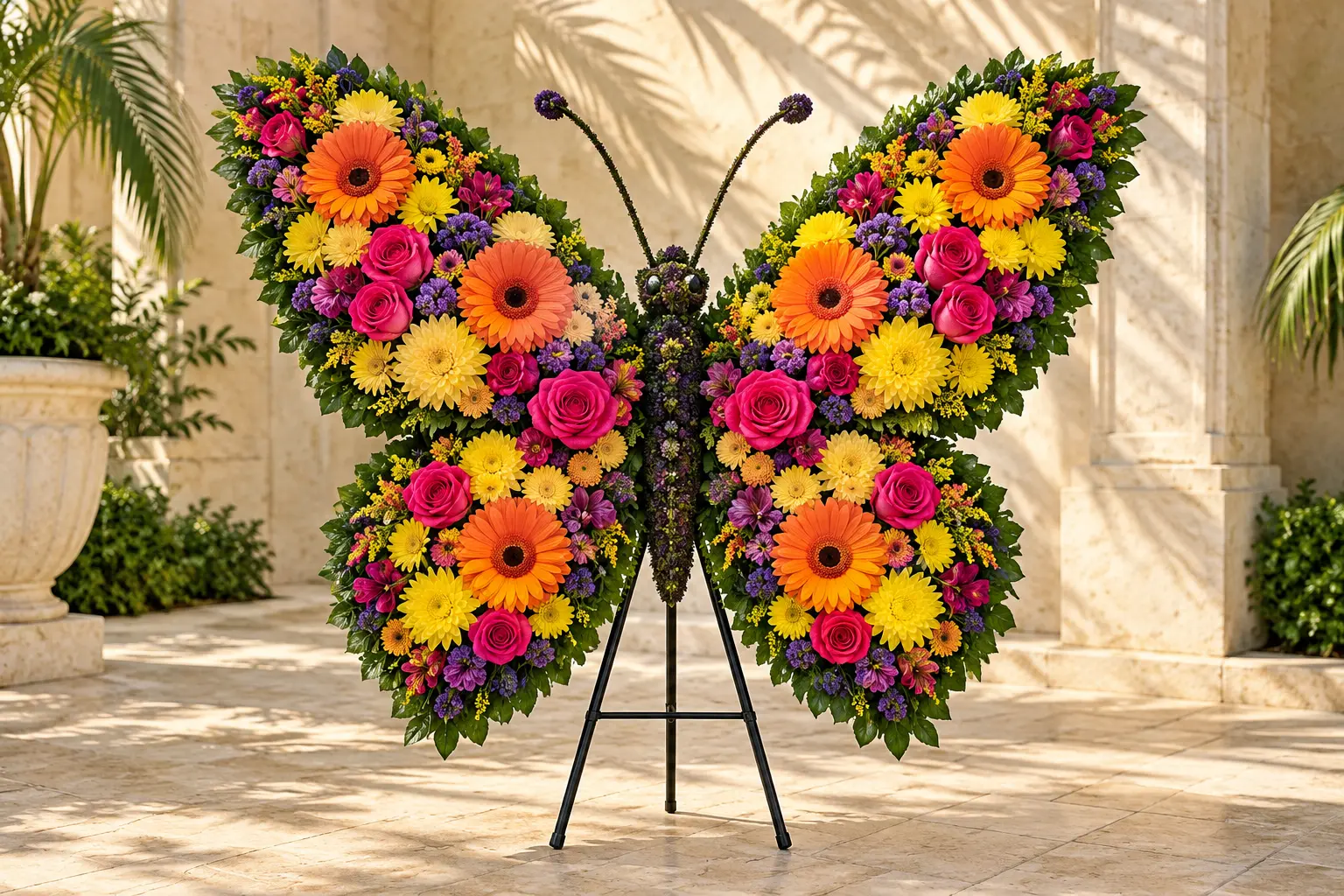
Start with something that brings them to mind.
A custom tribute can begin with a detail that people recognize: a favorite animal, an interest, a place or a meaningful shape. You do not need a finished drawing. Tell Claudia why that reference matters and which part of it you want the flowers to express.
The butterfly pictured here shows one way to use shape and strong color. Your starting point might be much simpler or entirely different. A photograph, sketch or short description can help make the idea clear, especially when several relatives are discussing it together.
Decide which details matter most.
Think about what makes the reference recognizable. It could be the outline, two particular colors or one distinctive feature. Identify those priorities before trying to reproduce every small detail. Flowers have their own shapes and textures, and the floral interpretation needs to read clearly at the scale of the display.
Share a budget and the date when the tribute is needed. Those details belong in the first conversation, alongside the idea itself. Claudia can discuss the floral approach, materials and support before a particular design is confirmed. A reference image helps communicate your intention; the final plan needs its own agreed details.
Give the tribute a place in the service.
Tell us where the piece will stand, how much space is available and which direction people will view it from. A shaped tribute may need an easel, base or another support, depending on the design. Include any venue restrictions and whether the arrangement will need to move between locations.
If you are adding names, a ribbon or a card, provide the exact wording. Keep one person available to gather decisions if the request comes from a group. The conversation can then bring the story, floral design and practical setting together in a clear proposal.