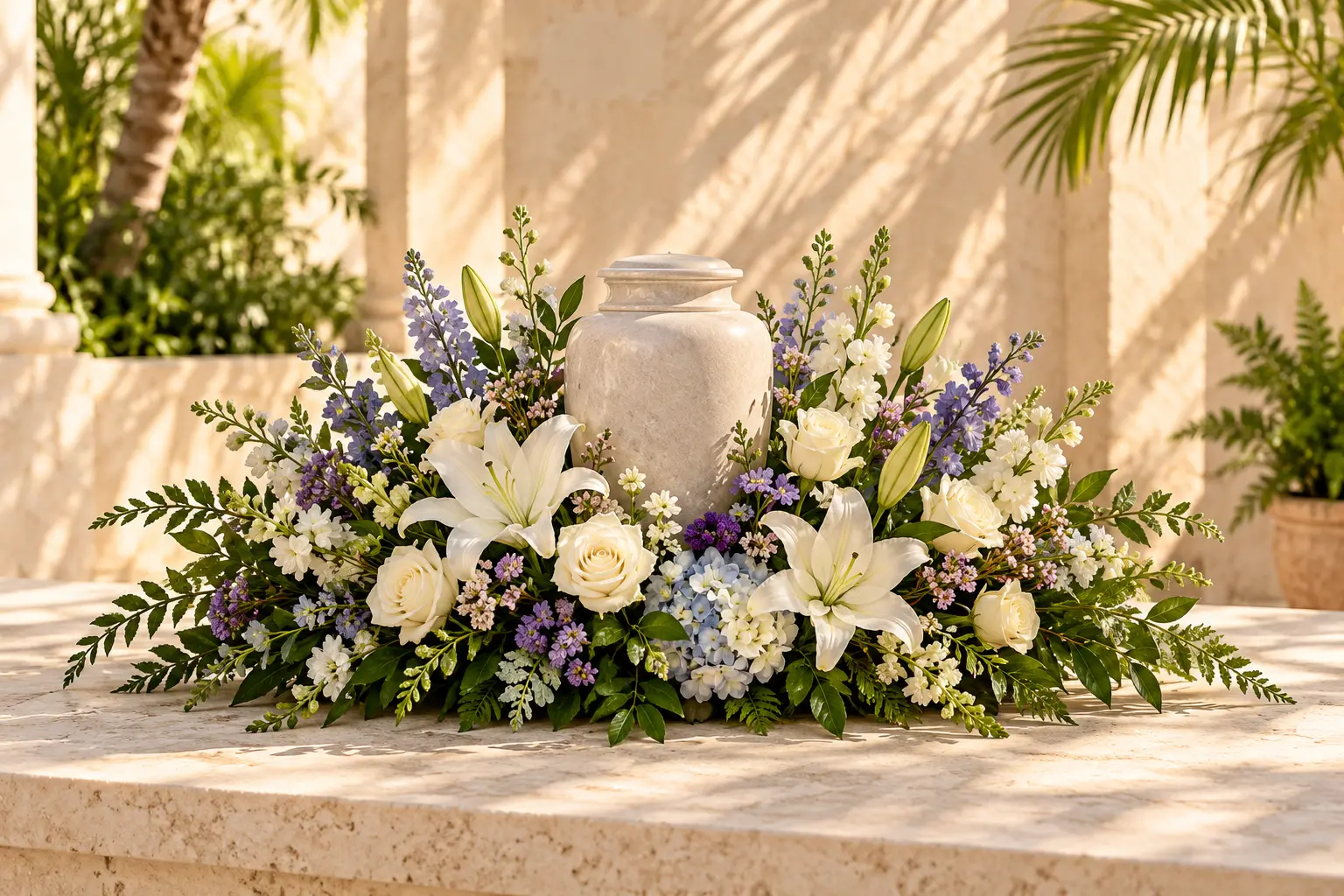
Let the central piece remain visible.
Flowers can surround an urn, sit in a crescent beside it, or form a low arrangement in front of a framed portrait. The right shape depends on the object and how the display will be viewed. A full surround and a front-facing arrangement use space differently.
Start with a photograph of the urn or frame and the dimensions of the table. Include anything else that will be displayed, such as photographs, keepsakes or a guest book. This helps Claudia discuss a composition that gives each part room without hiding the central piece.
Make room for personal details.
A meaningful color can connect the flowers to a photograph, a favorite place or the person’s interests. You can ask about a quiet palette, a garden-like mix or more expressive colors. Share your preferences and budget so the floral direction can be discussed around the whole setting.
For a portrait display, consider the frame’s orientation and whether its support needs room behind it. For an urn, mention its shape, base and any handles. These details are more helpful than choosing flowers from a photograph alone.
Confirm the objects and the handoff.
Let Claudia know which items you or the family will supply. Discuss the floral vessel or support and clarify which items belong to the arrangement. An urn shown in a photograph does not establish that a cremation urn is part of the floral request.
Tell us whether the flowers will stay at the venue or move to another setting after the gathering. That can affect the container, shape and way the pieces are handled. Confirm who will place the urn or portrait, the venue’s setup requirements and the timing before finalizing the display.